



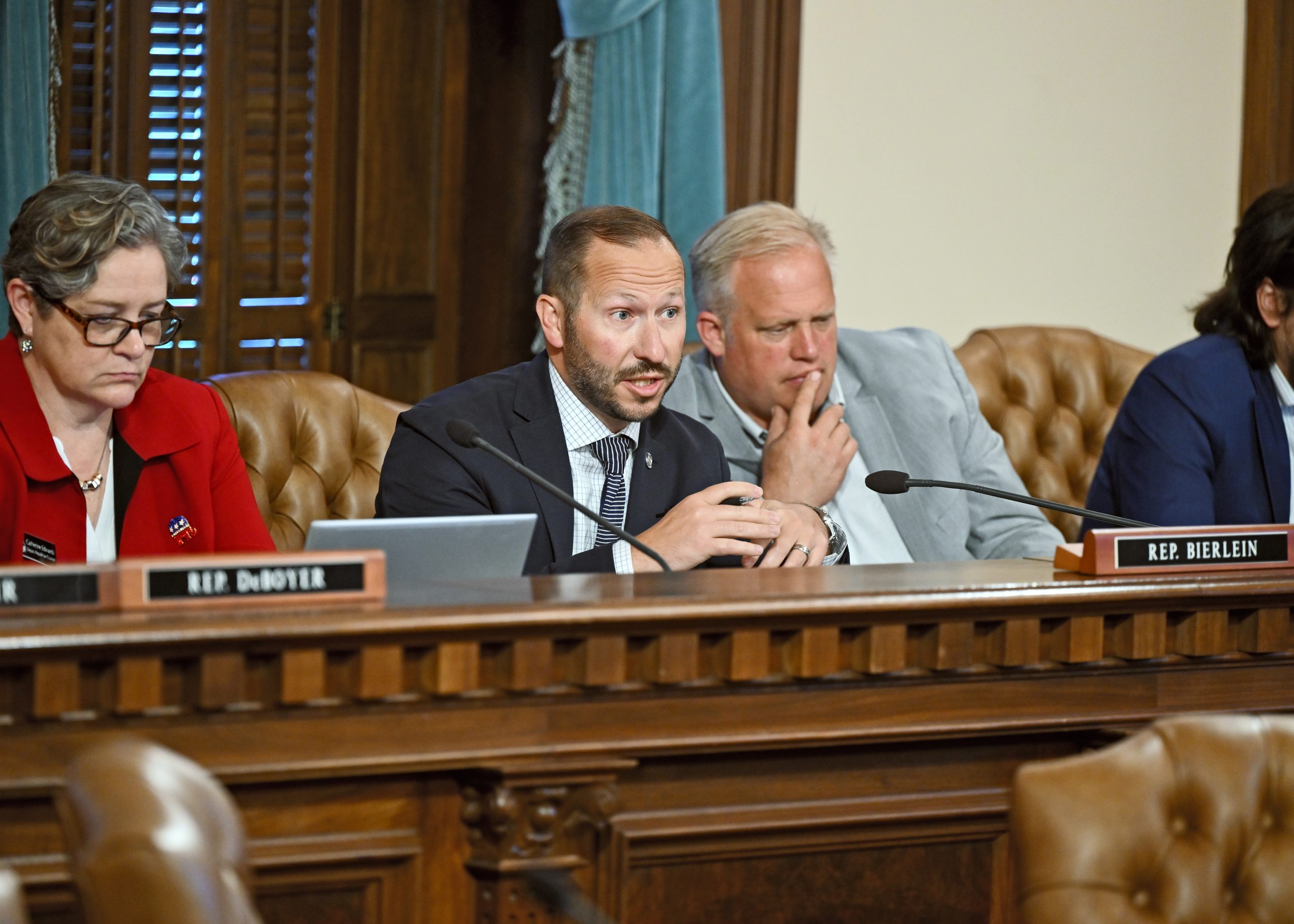
Michigan House Oversight Subcommittee on Public Health and Food Security Chairman Matthew Bierlein is continuing to look out for farmers throughout the state.
Bierlein and the committee heard a presentation on Tuesday from Michigan State University Extension on resources and support provided through its Managing Farm Stress Program.
“One issue I’ve heard about from farmers and agriculture organizations in my district is the growing impact that stress, uncertainty and mental health challenges are having on those who work in this vital industry,” said Bierlein, of Vassar. “Farming is a rewarding profession, but it comes with unique pressures, long hours, and circumstances that can often feel overwhelming. It takes a toll on individuals and families.”
MSU Extension Director Dr. Quentin Tyler and Dr. Remington Rice, an Extension Educator and state specialist in the Farm Stress program, highlighted the many factors that create stress for those working within one of Michigan’s largest industries, including labor challenges, rising input costs, market uncertainty, animal disease, weather that can make or break harvests, and the weight of running a family business.
A study from the Centers for Disease Control and Prevention found that farmer suicide rates are three and a half times higher than the national average. Studies have also shown that many farmers battle mental health struggles in silence due to stigma and the fear of being judged.
“In agriculture, many people are taught to endure, stay private, and keep going,” said Rice, who, on top of his work through MSU Extension, grew up on a multi-generational beef cattle farm in Benzie County that has remained in active production for more than 100 years. “That strength is part of the culture, but it can also keep people from asking for help early and before crisis. People need practical support that fits agricultural culture.”
Rice outlined work the program has done, through educational materials, online learning, establishing pathways to telehealth services, and referrals to therapists who understand the agriculture industry and issues that arise within. Following a 2019 national summit at MSU on the issue, 23 states adopted the university’s Farm Stress program model. Rice said MSU Extension also connected this outreach to farm business management support.
“Stress is often financial as well as emotional,” Rice said. “In some cases, what a farmer needs most is not only a conversation, but also help thinking through the business side of the problem. … We looked at the whole system.
“Michigan stepped in without a blueprint, created the blueprint and showed what the work should look like.”
“Behavioral health is a critical issue in our state for people from all walks of life,” Bierlein said. “Our state has almost a million people working in the agriculture industry. It was enlightening to hear about the work this critical program is doing to help our farmers, but it was noted that demand within the program was still incredibly high and tough to keep up with even with the workshops and counseling sessions that were facilitated. This showcases the true scope of what we’re dealing with from a mental health standpoint in our state. There is a clear need for increased behavioral health services, and Michigan must prioritize resources to care people desperately need.”



© 2009 - 2026 Michigan House Republicans. All Rights Reserved.
This site is protected by reCAPTCHA and the Google Privacy Policy and Terms of Service apply.